
Stock Market Basics: How Share Market Works in India

5paisa Capital Ltd

Stock Market Basics

Want to start your Investment Journey?

+91
By proceeding, you agree to all T&C*
hero_form
Content

A basic knowledge of the stock market is crucial for all investors and traders. The share market is a platform where investors buy and sell ownership stakes in publicly listed companies. It lets businesses raise capital for growth and investors to participate in the future performance of a business. The Indian stock market operates on regulated exchanges like the National Stock Exchange (NSE) and the Bombay Stock Exchange (BSE), and various intermediaries, like brokers, investors, regulators, and depositories, facilitate the trading process. Understanding the share market can enable investors to make informed investments, control risks, and recognise opportunities for investment. This article explains stock market basics for beginners, how stock market works, and more.

What is the Share Market?

A share market is a place where the shares of publicly listed companies are traded. A business can raise capital for expansion, operation, or new projects by selling shares to investors via the stock market. By purchasing these shares, investors become partial owners of the company.

There are two major purposes for the share market. It is a source of capital for companies without the use of loans. For investors, it can be a way to grow their investments through capital appreciation and dividends. The stock prices move according to the company's performance, economic conditions, industry conditions, and investor's sentiments.

What are Stocks?

Stocks are a representation of ownership in a company. When an investor buys a stock, they acquire a small ownership interest in that business and may benefit from its growth and profitability.

Issuing stocks is a method that a company uses to get funds from the public. Stocks offer investors the potential of capital gains, as well as dividends. Stock prices fluctuate constantly due to changes in demand and supply, company financials, market conditions, and future expectations for growth. One of the most popular investment tools for long-term wealth building is stocks.

How Does the Stock Market Work in India?

Here's a step-by-step process on how stock market works in India.

1. Companies Raise Capital Through IPOs

Businesses looking to raise funds offer shares to the public through an Initial Public Offering (IPO).

2. Shares Get Listed on Stock Exchanges

After the IPO process, shares become available for trading on recognised stock exchanges such as NSE and BSE.

3. Investors Open Trading and Demat Accounts

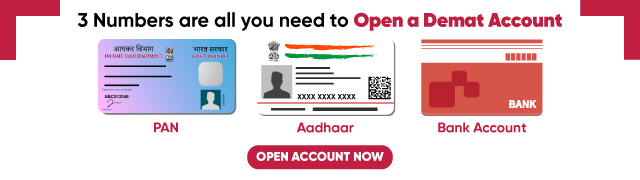
Investors need a trading account to place orders, and a Demat account to hold securities electronically.

4. Buy and Sell Orders Are Placed

Investors submit purchase or sale orders through registered stockbrokers.

5. Orders Are Matched by the Exchange

The exchange's electronic system matches buyers and sellers based on price and quantity.

6. Trade Execution Takes Place

Once matching occurs, the transaction is executed automatically.

7. Settlement Process Begins

Shares are credited to the buyer's Demat account, while funds are transferred to the seller.

8. Prices Change Continuously

Share prices move throughout the trading session based on demand, supply, company news, and market developments.

9. Investors Monitor Their Portfolio

Investors track performance and make decisions based on their investment goals and market conditions.

10. Regulators Ensure Market Integrity

Regulatory bodies monitor market activities to promote transparency and investor protection.

Understanding the Stock Market Basics – Important Terms

The Indian stock market consists of several participants, institutions, and mechanisms that work together to facilitate trading and investment activities. The table below shows the stock market basics for beginners. 

Term Description
Stock Exchange A regulated marketplace where securities are bought and sold.
NSE National Stock Exchange, one of India's largest stock exchanges.
BSE Bombay Stock Exchange, Asia's oldest stock exchange.
SEBI Securities and Exchange Board of India, the capital market regulator.
Investor An individual or institution that purchases securities for returns.
Trader A market participant who buys and sells securities frequently.
Stockbroker An intermediary authorised to execute trades on behalf of investors.
Demat Account An account used to hold securities in electronic form.
Trading Account An account used to place buy and sell orders in the market.
Depository An institution that holds securities electronically.
CDSL Central Depository Services (India) Limited.
NSDL National Securities Depository Limited.
IPO Initial Public Offering through which companies issue shares to the public.
Share A unit of ownership in a company.
Stock Ownership interest represented through shares.
Equity Ownership capital of a company.
Dividend A portion of profits distributed to shareholders.
Market Capitalisation Total market value of a company's outstanding shares.
Index A benchmark that tracks the performance of selected stocks.
Sensex Benchmark index of the BSE.
Nifty 50 Benchmark index of the NSE.
Bull Market A period characterised by rising stock prices.
Bear Market A period characterised by falling stock prices.
Bid Price The highest price a buyer is willing to pay.
Ask Price The lowest price a seller is willing to accept.
Settlement The process of transferring shares and funds after a trade.

Conclusion

The Indian stock market offers a well-defined structure for raising funds from the market and engaging in business growth by investing in listed companies. Investors can navigate the stock market with confidence by grasping the fundamental concepts, such as shares, stocks, exchanges, brokers, depositories, and market participants. Understanding the share market basics is essential for making informed investment decisions and making better financial choices in the long term.

Disclaimer: Investment in securities market are subject to market risks, read all the related documents carefully before investing. For detailed disclaimer please Click here.

Frequently Asked Questions

Shares are units of ownership in a particular company, and stocks are ownership in one or more companies.

To learn about the share market for beginners in a simple way, one needs to have knowledge about the core concepts, follow the market news, study the financials of companies, utilise educational platforms, and invest gradually.

A stock market index is a measure of the performance of a selected group of stocks and a benchmark of overall market trends. This includes Nifty 50 and Sensex.

To participate in the share market, enroll with a registered broker to open a trading and a dematerialisation (Demat) account, follow the verification process, fund the account, and buy shares via a stock exchange.

No, the trading typically involves short term price action, and investing is a long term strategy with the goal of creating wealth.

Yes, registered stockbrokers can provide investors with online trading platforms.

Stocks can be classified based on market capitalisation, investment style (growth or value), dividend payments, ownership type, and industry sector.

Open Free Demat Account

Be a part of 5paisa community - The first listed discount broker of India.

+91

By proceeding, you agree to all T&C*

footer_form